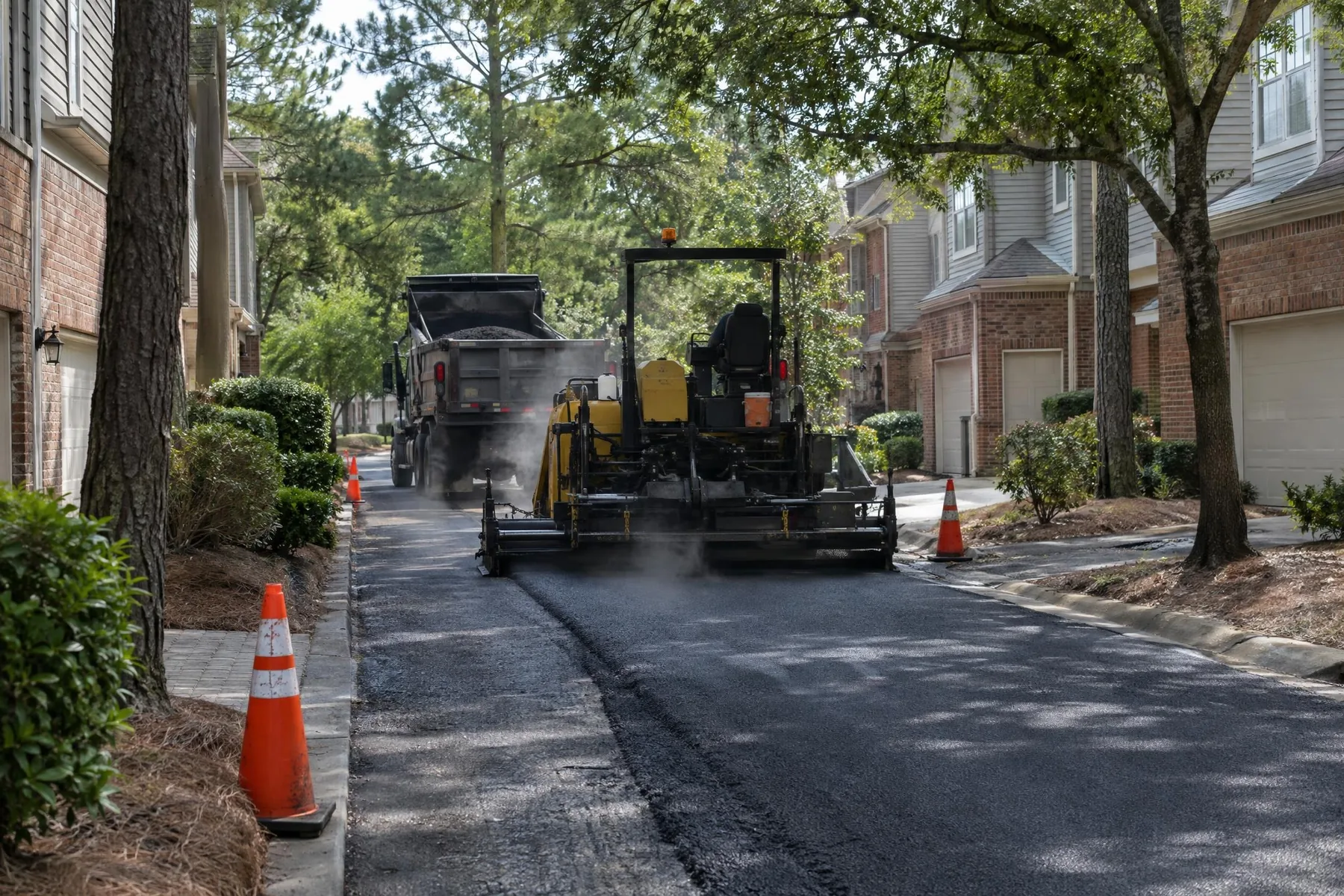
What a Smyrna driveway rests on matters more than what you see, and red clay gives nothing back to a thin base. The crew strips the failed asphalt, builds up crushed stone in compacted lifts and rolls hot mix across the top, sloped so water heads for the street. The estimate lists stone and asphalt separately, so every dollar has a visible destination. Before digging starts, garage thresholds, mailbox posts and neighboring fences are measured and protected, and the pitch is checked against the house.
Apartment communities, office suites, church lots and neighborhood shops all need a surface that drains and looks cared for. This work covers commercial, HOA and community paving, scheduled in sections so tenants keep reaching their doors. Drainage faults are solved beneath the asphalt rather than on top of it. A manager or board receives one plan that lists each phase in order. Entrances stay open as long as possible, and a posted schedule tells drivers which rows are closed on which day. Each phase ends with a sweep so loose gravel never reaches the next section.
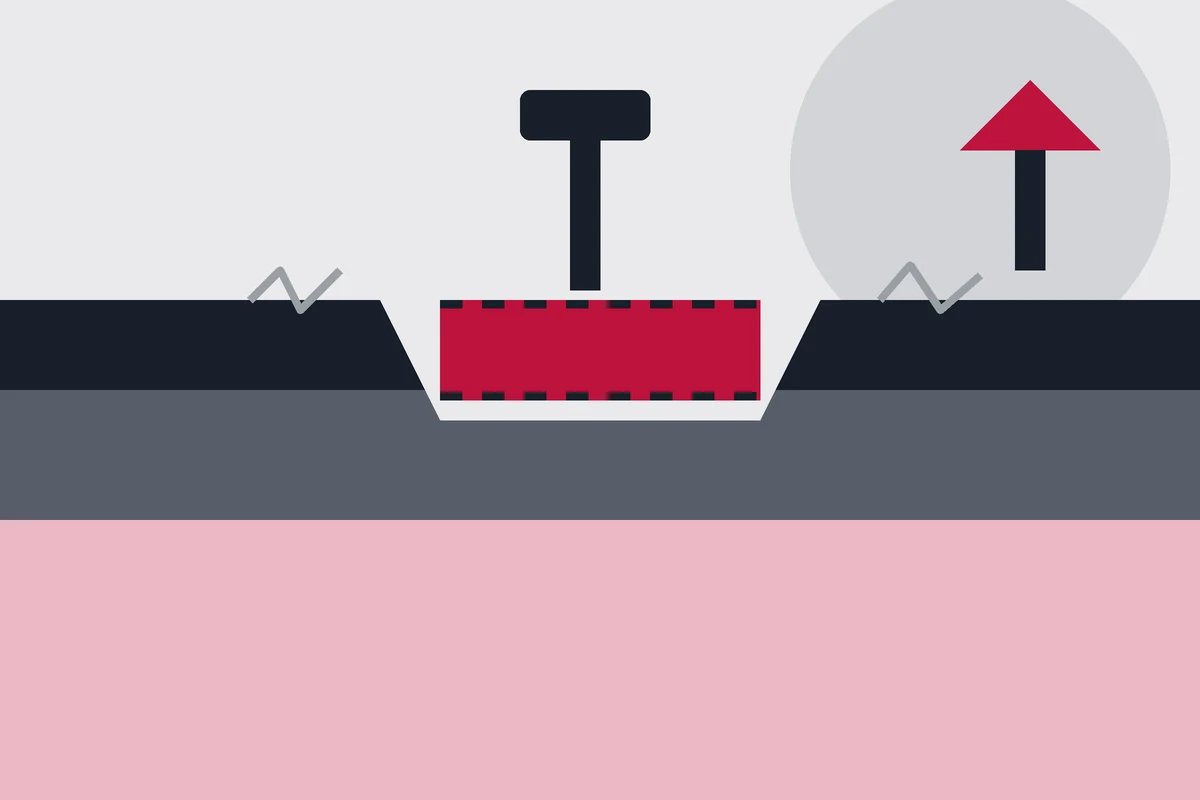
A hairline crack takes in rain all afternoon, and one freezing night pries it open by morning. Repairs cover cracks, potholes, ragged edges and sunken patches. Crews saw out the weak pavement, rebuild the stone beneath it and pack fresh mix level with the surface around it. The bid gives each damaged spot its own price, letting you fix the worst ones first and schedule the rest later. A crew member also explains why each spot failed, so the same mistake is not repeated.
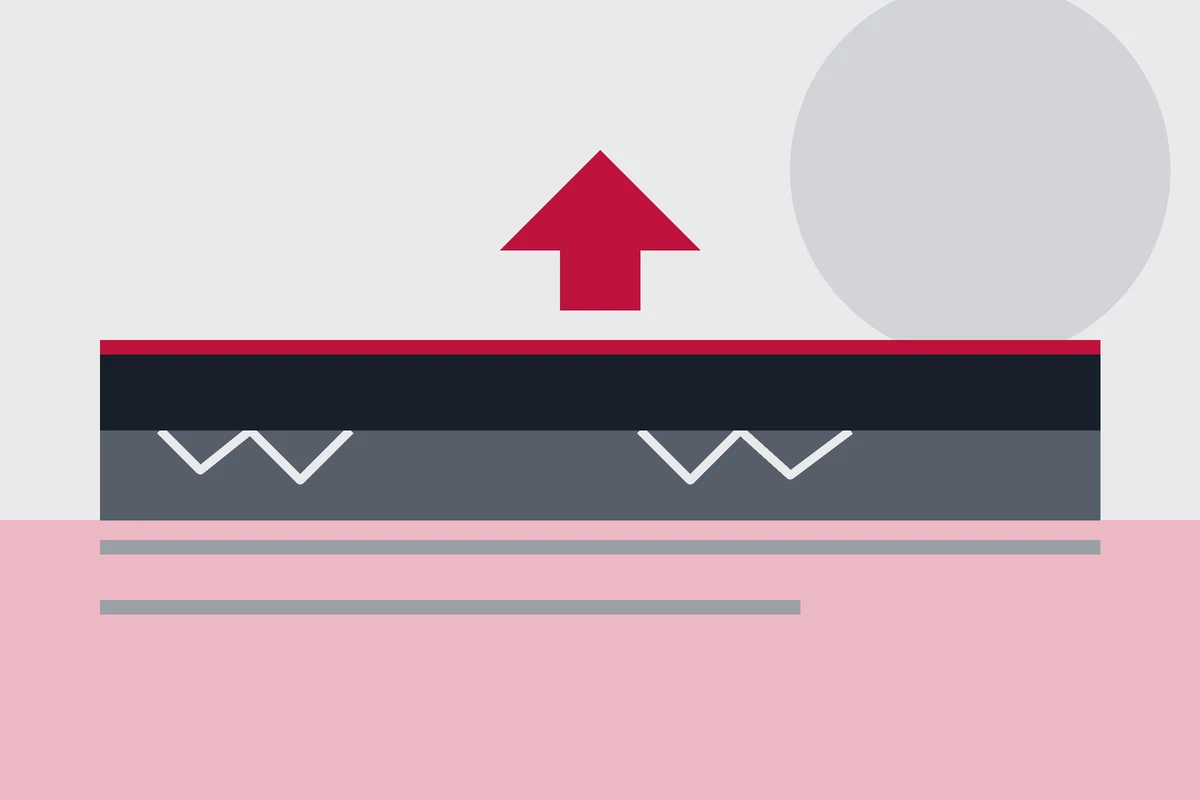
Asphalt Resurfacing
Faded, rough pavement over a firm base often needs only a new top layer, and that costs a fraction of a rebuild. After cleaning and crack filling, the crew rolls a new skin of roughly two inches or less across the entire area. The base is probed first, because soft ground drags an overlay down with it. Should the base prove weak, the estimate states that and prices a deeper repair, so you never buy a surface that cannot last. Crews finish the overlay with hand work along the edges and joints.
Asphalt Sealcoating
Sun, oil drips and heavy rain wear away the binder in asphalt, and a sealcoat lays a protective film over it. Crews sweep the surface, fill cracks, prime oil stains and spread sealer in even passes. The cost is small next to replacement, and the payoff is greatest on pavement that is still sound. Large lots are coated in stages so part of the lot stays usable while the rest cures. Edges are trimmed with care, which keeps sealer off lawns and planting beds.
Parking Lot Striping
Faded paint leaves drivers guessing, and an unmarked lot looks neglected to every visitor. Fresh lines include stall markings, directional arrows, fire lanes and accessible stalls on new pavement and old alike. Chalk goes down first, giving you a chance to compare the lines with your plan before paint is sprayed. Busy properties can be repainted in sections so customers can keep parking, and the paint is applied thick enough to survive heavy daily traffic. Cones and tape stay near wet paint until it has dried.